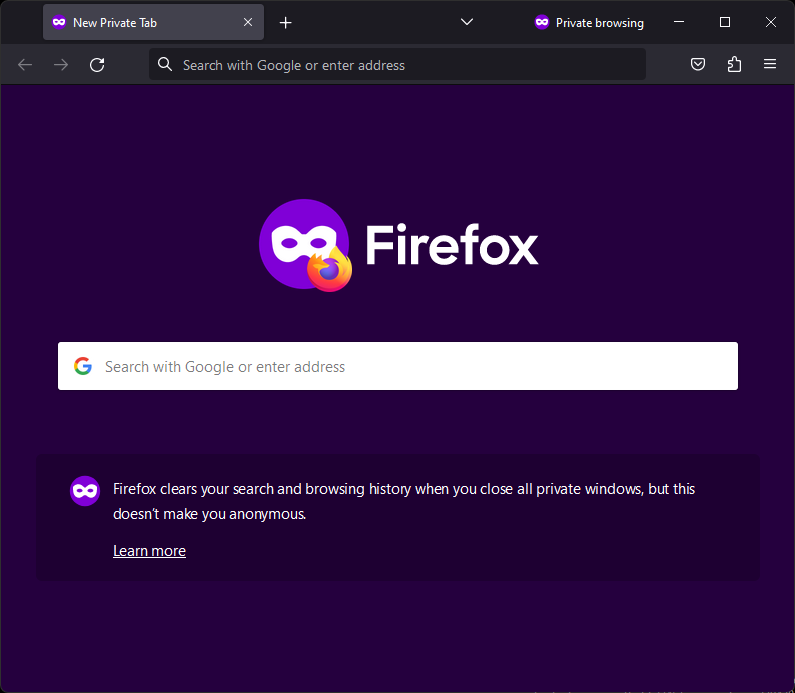
You’re at the airport. Again. The fluorescent lights hum, the distant roar of a jet engine vibrates through the floor, and you’re hunched over your phone, that familiar dread creeping in. You pull up your flight search for the fifth time today, hoping against hope the price for that Denver-to-Boston red-eye on American hasn’t spiked again. It has. You sigh, then, almost instinctively, you open a new browser window, click the three dots, and select “New Incognito Window.” A little spy icon appears. “Aha,” you think, “now they can’t track me. Now they won’t know I’m desperate.” You punch in the same dates, the same route, feeling a tiny thrill of defiance. You hit search. The loading spinner churns… and the price? It’s exactly the same. Or worse, it’s gone up another $20. Frustration boils. So, does incognito mode really lower flight prices? Final verdict: it absolutely does not, and it’s time to put this widely believed myth to bed.
The $50 Price Jump You Blamed on Your Browser
You’ve seen it happen countless times. You search for a flight from, say, Los Angeles to Miami on Delta. The price pops up, maybe $350. You mull it over, check your calendar, talk to your travel partner. An hour later, you search again. Boom. The same flight is now $400. That’s a $50 jump, and your mind immediately jumps to conclusions. “They know I’m interested,” you tell yourself. “They’re tracking my cookies, seeing my repeated searches, and hiking the price because they know I’m going to buy it.” This isn’t just a hunch; it’s a belief so ingrained that most frequent flyers have, at some point, defaulted to incognito mode as a supposed secret weapon.
The persistence of this myth isn’t surprising. Airfares are notoriously volatile. They fluctuate by the minute, sometimes by the second. This constant, unpredictable movement makes it incredibly easy to misattribute cause and effect. You search, the price changes, you used incognito mode, therefore incognito mode *must* have been the solution (or the problem, if it went up). But that’s a classic correlation-causation fallacy. The reality is that the airline pricing systems, like those used by United or Spirit, are far more complex and impersonal than you might imagine. They’re not watching your individual browsing habits; they’re reacting to a colossal, ever-shifting ocean of data.
Incognito Mode’s True Purpose: Not Your Personal Price Negotiator
Let’s be unequivocally clear: multiple studies, travel experts from publications like The Points Guy, and even the airlines themselves confirm that using incognito mode has no systematic effect on the cost of airline tickets. None. Zero. So, if it doesn’t lower flight prices, what exactly *does* incognito mode do? Its primary function is quite simple: it prevents your browser from saving local browsing history, cookies, and site data on *your device*. Think of it as a digital amnesia for your computer or phone.
When you close an incognito window, all the session data – what sites you visited, any forms you filled out, any cookies those sites tried to install – is wiped clean from your local machine. It’s excellent for maintaining privacy if you’re using a shared computer, or if you don’t want certain searches cluttering your browser history or influencing future ad targeting. But here’s the crucial distinction: incognito mode does absolutely nothing to hide your IP address, which is the unique numerical identifier of your internet connection. It doesn’t mask your location from the websites you visit, nor does it prevent the airline’s servers from seeing that *a* request came from *your* IP address. The airline’s sophisticated dynamic pricing algorithms simply don’t care if you’ve cleared your local cookies.
How American Airlines and Delta Actually Price Your Seat
To understand why incognito mode is useless, you need to grasp how airlines truly price their tickets. It’s a masterclass in dynamic pricing, a system so intricate it makes a Swiss watch look simple. Airline pricing is determined by complex algorithms that respond to a multitude of broad market activities, not individual browser cookies. These factors include real-time demand across the entire route network, seat availability within different fare classes, booking patterns for that specific flight and date, competitor pricing, fuel costs, even the day of the week you search, and the time of day you’re flying.
Consider a flight from Chicago to Orlando on American Airlines. That flight isn’t just one price; it’s a hundred different prices corresponding to dozens of “fare classes” – each with its own rules, restrictions, and inventory. There might be 10 Basic Economy seats at $150, 20 Main Cabin seats at $200, 15 Main Cabin Extra seats at $250, and so on. As seats sell within a cheaper fare class, the system automatically closes that class and moves to the next available, more expensive one. That’s why you see prices jump. It’s not because Delta or United knows *you* searched; it’s because *someone* just bought the last seat in the $200 fare class, and now only the $220 seats are left. It’s a relentless, real-time auction, happening millions of times a day across every airline globally. And your browser’s private mode simply doesn’t figure into that equation. So, does that mean you’re completely powerless against these price shifts?
Incognito mode prevents local cookie storage, not airline price tracking.
Airline pricing is dynamic, responding to broad demand, not individual searches.
Optimal domestic flight booking window: 1-3 months out.
A VPN can sometimes change perceived point-of-sale, potentially altering prices by region.
The VPN Loophole: Sometimes a $20 Difference, Sometimes Zero
While incognito mode is a dead end, there’s another tool in the privacy arsenal that *can* sometimes influence flight prices: a Virtual Private Network, or VPN. Unlike incognito mode, a VPN actually masks your IP address and makes it appear as if you’re browsing from a different geographic location. Why does this matter? Because flight prices can, in fact, vary significantly by region or country, driven by local market demand, purchasing power, and specific airline promotions targeting particular markets.
For instance, searching for a flight from New York to London might yield a different price if your VPN makes it seem like you’re browsing from Mexico City or Istanbul, compared to searching directly from the United States. You might find a British Airways flight for $700 when browsing from the UK, but $720 from the US, or vice-versa. Sometimes the difference is a negligible $5-10; other times, you might uncover a $20-50 saving. It’s rarely a game-changer, but it can be a useful trick to try for international routes. The key here is “sometimes.” It’s not a guaranteed savings method, and often, you’ll find no difference at all. But for a persistent traveler, it’s worth a shot. Just remember, a VPN service often comes with a subscription cost, which might negate any small savings if you’re not already a user.
Using a VPN for flight searches isn’t a silver bullet. Prices often remain unchanged, and sometimes the connection can be slow, making the search frustrating. Some airline websites may even flag or block VPN users, requiring you to switch servers or disable it temporarily. Don’t expect dramatic savings every time.
Booking Smarter: The 1-3 Month Rule That Saves Real Money
So, if incognito mode is a bust and VPNs are a gamble, what *actually* works? Forget the digital cloak and dagger; real savings come from smart, strategic planning. The single most effective strategy is flexibility, especially with your travel dates. Flying mid-week (Tuesday-Thursday) almost always offers better prices than weekend travel. Off-peak seasons will drastically undercut peak holiday travel, even on budget carriers like Spirit or Frontier.
Next, always compare prices across multiple platforms. Don’t just stick to Google Flights or Kayak; check the airline’s direct website as well. Sometimes, airlines like Southwest don’t show up on aggregators, or they offer exclusive web-only deals. Setting up fare alerts is another powerful tool; many platforms will email you when the price for your desired route drops. And finally, there’s the optimal booking window. For domestic flights within the U.S., the sweet spot is typically 1 to 3 months out. For international travel, aiming for 3 to 6 months in advance often yields the best fares. Booking too early can be pricey, but booking last minute is almost always a budget killer, thanks to those dynamic pricing algorithms that know exactly when you’re desperate.
Combine these strategies: search on a Tuesday for a Tuesday flight 2 months out, using fare alerts. This multi-pronged approach often uncovers the best deals, potentially saving you $100 or more on a round-trip ticket.
Bottom Line
The next time you’re frantically searching for a flight, resisting the urge to open an incognito window is your first step to smarter travel. It’s not doing anything for you. Instead, focus your energy on the strategies that actually move the needle: be flexible with your dates, cast a wide net across booking platforms, set up those fare alerts, and aim to book within that crucial 1-3 month window for domestic flights. That’s how you save real money, not by playing hide-and-seek with airline pricing computers. They’re far too smart for that.