Ever wondered why that pasta dish tastes like cardboard, yet you can’t get enough of the tomato juice? It’s not just your imagination—and it’s not necessarily the chef’s fault. In 2026, food science has revealed exactly what happens to our bodies at 35,000 feet. The combination of cabin pressure, dry air, and high altitude transforms your “healthy” meal into a recipe for bloating and discomfort.
The “Taste Bud Shutdown”
At high altitudes, your sense of smell and taste drops by about 30%. Because the cabin air is drier than the Sahara Desert, your nasal passages dry out, making food seem bland. To compensate, airlines often load meals with 30% more salt and sugar just so you can taste something. This massive sodium spike is the primary reason you feel bloated and dehydrated after landing.
The Gas Expansion Problem
As cabin pressure drops during take-off, the gas in your intestines expands by about 25%. If you eat heavy, greasy “terminal food” right before boarding, that expansion leads to that painful, heavy feeling in your stomach.
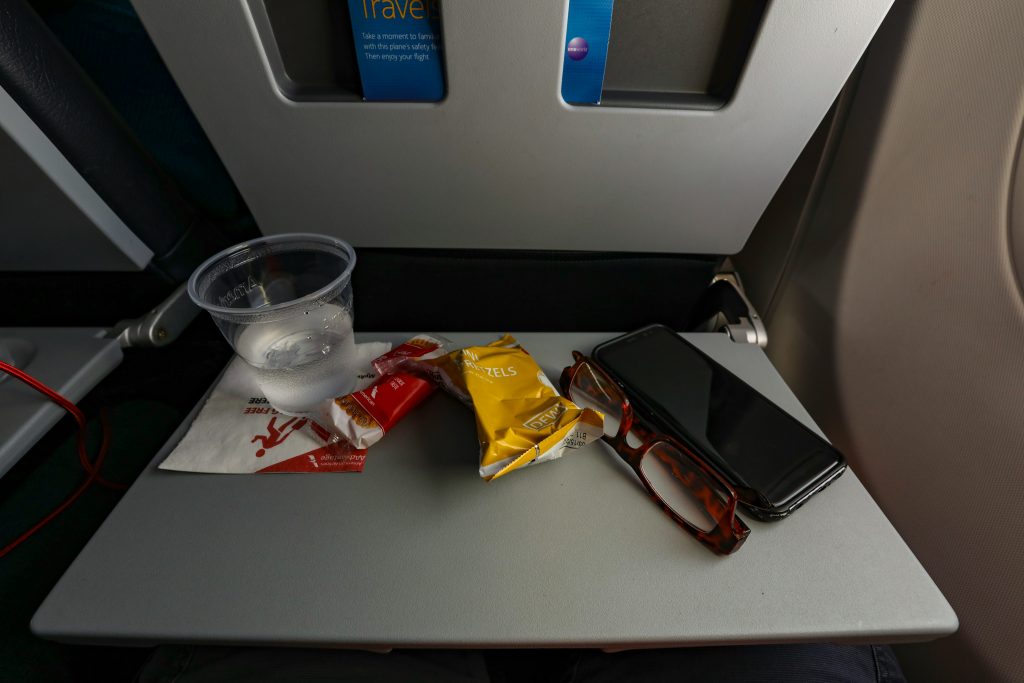
Pro Tip: Avoid the “snack boxes.” Science shows they often contain more sodium than the main hot meal. Stick to umami-rich flavors (like tomatoes or mushrooms) which actually taste better in the air without the need for extra salt.