Federal Aviation Regulation (FAR) 121.576 mandates that all carry-on baggage must be properly stowed before an aircraft can take off, a directive that underpins much of what you observe during boarding. That subtle, almost unconscious touch a flight attendant makes to the overhead bins as they walk the aisle isn’t just a reflex; it’s a critical, multi-layered maneuver rooted in safety, efficiency, and surprising economic realities. You might see it as mere habit, but understanding why flight attendants touch overhead bins during boarding process fundamentally changes your perspective on cabin operations, and perhaps, your own boarding habits.
FAR 121.576 and the Visual Scan for Cabin Security
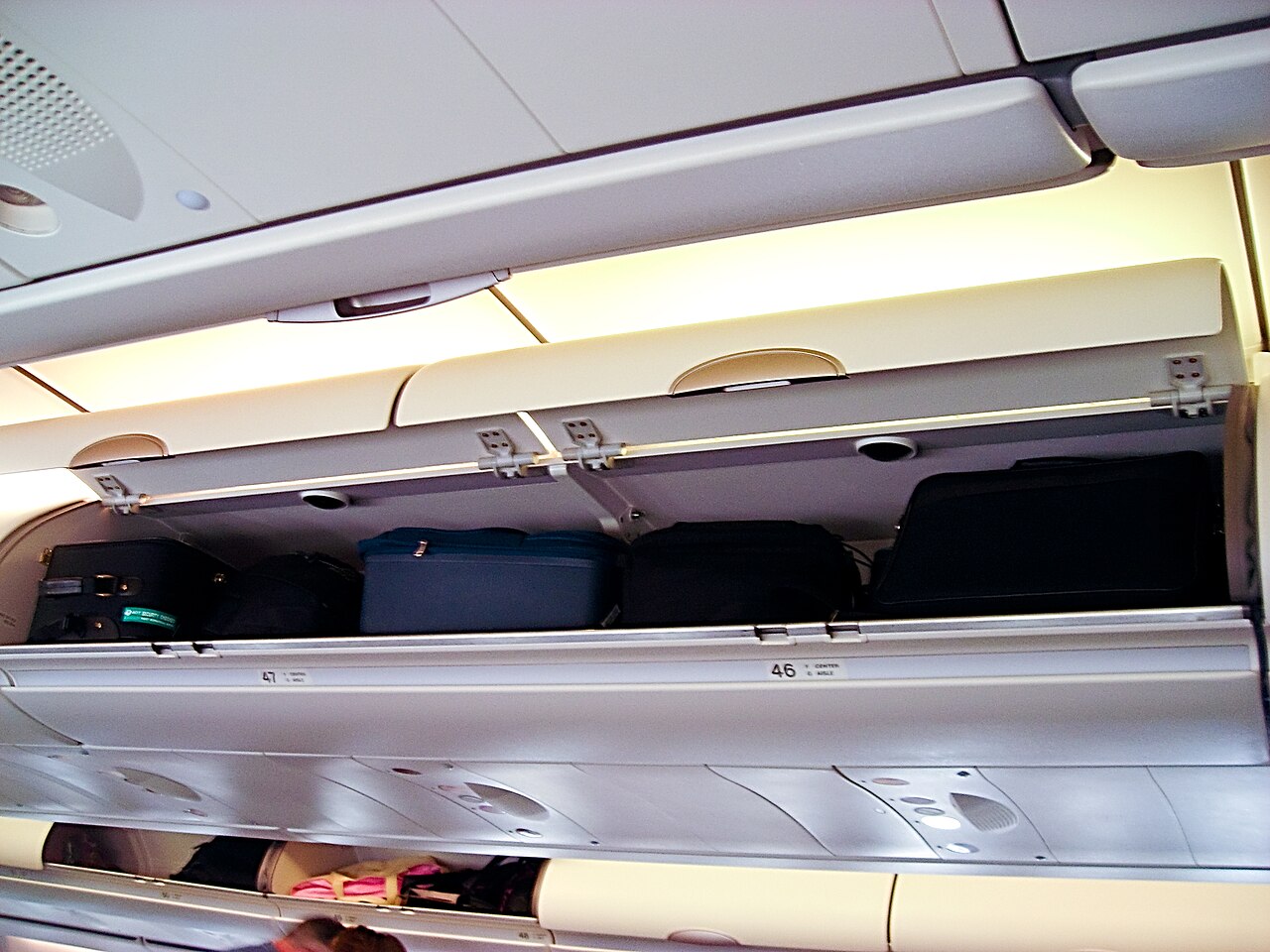
Before any aircraft pushes back from the gate, the cabin must be secure. This isn’t merely a suggestion; it’s a non-negotiable requirement under FAR 121.576. Flight attendants, as they navigate the often-chaotic boarding process, are simultaneously conducting a silent, continuous safety audit. The touch, that light brush of the hand against the overhead bin, serves as a tactile checkpoint, a steadying anchor as they move through a potentially rocking cabin, especially if taxiing has already begun. But more importantly, it’s a cue for a visual sweep.
You’ll notice them, even if you don’t consciously register it, scanning each bin for any tell-tale sign of an insecure latch. A bin that isn’t fully closed can become a dangerous projectile during unexpected turbulence or a sudden braking maneuver. Imagine flying through chop over the Rockies, and a 20-pound carry-on bag, improperly secured, suddenly drops from 6 feet onto an unsuspecting passenger below. The potential for serious injury, from concussions to broken bones, is very real. This isn’t hyperbole; the National Transportation Safety Board (NTSB) has documented numerous incidents of passenger injuries from falling baggage, many preventable by a simple, secure latch. This quick, almost imperceptible inspection is their first line of defense against such scenarios.
They’re not just checking latches; they’re also looking for bags that are clearly too large or visibly bulging, or even luggage that looks like it might contain prohibited items, though that’s a secondary concern to stability. This visual scan, triggered by the physical interaction with the bin, is a fundamental part of maintaining cabin integrity, a requirement that supersedes almost all others once the boarding door is about to close.
The $70-Per-Minute Cost of Improper Bag Stowing
Every minute an aircraft sits at the gate beyond its scheduled departure time costs an airline money. Lots of it. Industry estimates suggest that for major carriers like Delta or American Airlines, a single minute of delay can cost upwards of $70 in fuel, crew salaries, gate fees, and connecting flight impacts. Multiply that by 15-20 minutes—the common delay caused by re-stowing bags—and you’re looking at a $1,000 to $1,400 hit for just one flight. This steep financial reality is a key driver behind the flight attendant’s focused effort on overhead bin management.
When you see a flight attendant methodically rearranging bags, or gently nudging a passenger to consolidate their items, they’re not being arbitrary. They’re optimizing limited real estate to prevent a cascade of delays. An improperly stowed carry-on—perhaps placed horizontally when it should be vertical, or occupying space clearly meant for two bags—can necessitate a time-consuming scramble to find alternative storage. This often leads to gate-checking bags, a process that not only frustrates passengers but consumes precious minutes right before departure. Airlines like United, with their often-strict carry-on policies, know these delays compound quickly.
This isn’t just about the current flight. A delay ripples through the airline’s entire network, impacting subsequent flights, crew duty times, and passenger connections. So, while you might just see them adjusting a bag, they’re actually protecting the airline’s bottom line and trying to keep your travel plans on track. It’s an economic dance where every inch of overhead space matters, and every second counts.
United’s Carry-On Policy and the Shared Economy of Overhead Space
The overhead bin isn’t your personal closet for the duration of the flight, nor is it exclusively for the seat directly below it. It’s shared real estate, a communal resource within your cabin section, a concept many travelers routinely misunderstand. Airlines like United Airlines, for instance, have explicit carry-on dimensions (typically 22 x 14 x 9 inches, including handles and wheels) not just for weight and balance, but to ensure that the finite space can accommodate as many standard-sized bags as possible.
When flight attendants touch the bins, they’re not just checking for closure; they’re mentally mapping the Tetris puzzle of luggage within. They’re ensuring bags are stowed correctly—wheels first for standard roll-aboards, maximizing depth and allowing multiple bags to fit. Stowing a bag sideways, for example, can consume the space of two or even three properly oriented bags, creating an artificial shortage. This is where the “shared economy” comes into play: your decision affects everyone else in your section.
Furthermore, passengers are consistently advised to place smaller personal items—purses, backpacks, laptop bags—under the seat in front of them. This simple act frees up vital overhead space for larger carry-on suitcases, those items that genuinely can’t fit under a seat. When you put your small tote in the bin, you’re not just taking up your space; you’re taking away the only viable option for someone else’s larger bag, potentially forcing them to gate-check and pay an unexpected fee. The flight attendant’s job is to orchestrate this shared space, ensuring fairness and efficiency for all, not just for the person who boarded first.
• Most major airlines, including Delta and American, limit carry-on bags to approximately 22 x 14 x 9 inches.
• Improper bag stowing can cause over $1,000 in delays for a single flight.
• Overhead bins are shared space; always put smaller personal items under the seat in front of you.
• Flight attendants are generally prohibited from lifting heavy bags due to injury risk.
Why Delta Flight Attendants Can’t Lift Your 40-Pound Bag
You’ve seen it: a passenger struggling with an oversized, overstuffed carry-on, then looking expectantly at a passing flight attendant. Here’s a surprising truth: for their own safety and under strict company policy, flight attendants for airlines like Delta, Southwest, and American are generally prohibited from lifting heavy passenger bags into overhead bins. This isn’t about being unhelpful; it’s about preventing workplace injuries.
Repeatedly lifting heavy or awkwardly shaped luggage can lead to chronic back, shoulder, and neck injuries. A typical carry-on can easily weigh 30-40 pounds once packed. Imagine lifting that 50 or 60 times a day, often from an awkward angle, in a confined space. It’s a recipe for disaster. According to OSHA (Occupational Safety and Health Administration) guidelines, frequent heavy lifting without proper ergonomics is a leading cause of musculoskeletal disorders, and airlines face significant liability and lost productivity from such injuries.
So, when a Delta flight attendant politely declines to lift your bag, they’re adhering to a safety protocol designed to protect their long-term health and career. Their role is to assist with *stowing*—guiding you on placement, perhaps helping to maneuver a bag that’s already mostly in—not to perform the heavy lifting. This policy places the onus firmly on the passenger to be able to lift their own bag into the overhead compartment. If you can’t lift it yourself, it’s generally too heavy to be considered a carry-on and should be checked instead. This rule, though often unspoken, is a critical component of cabin safety and crew welfare.
The 30-Second Deplaning Delay Caused by Backwards Stowing
The moment the aircraft pulls up to the gate, a collective sigh of anticipation ripples through the cabin. Everyone wants to deplane quickly. And for many, especially those with tight connections, every second counts. Your choice of where to stow your bag significantly impacts not just your own exit, but the efficiency of the entire deplaning process for hundreds of people behind you.
When you place your carry-on in an overhead bin several rows behind your assigned seat—a common tactic to ensure you find space—you’re creating an inevitable bottleneck. As the forward door opens and passengers begin to flow out, you’re forced to push upstream against this tide to retrieve your bag. This isn’t just an inconvenience; it’s a measurable delay. Each passenger struggling to navigate against the flow, or waiting for others to pass so they can walk back for their bag, can add anywhere from 15 to 30 seconds to the deplaning time for that particular section.
Multiply that by several passengers, and you can easily accumulate minutes of unnecessary delay, potentially causing someone to miss a critical connection or simply prolonging the cramped experience for everyone else. Flight attendants are keenly aware of this dynamic during boarding. While they might not explicitly tell you not to stow your bag behind your seat, their continuous scan of the bins and their subtle interventions are aimed at ensuring bags are placed in the most logical, forward-reaching position. Their goal is to set the stage for a smooth, efficient exit, minimizing the post-arrival chaos. When they touch a bin and peer inside, part of that assessment is anticipating the deplaning sequence and how efficiently the cabin can be cleared.
Bottom Line
That seemingly casual touch a flight attendant makes to the overhead bins is anything but. It’s a multi-purpose action, ensuring your safety by securing luggage, protecting the airline’s bottom line by preventing costly delays, and orchestrating the efficient use of shared cabin space. By understanding this, you can be a better, more considerate flyer: keep personal items under the seat, lift your own bag, and always stow your carry-on in the bin closest to or in front of your seat. Do this, and you’re not just making a flight attendant’s job easier; you’re contributing to a smoother, faster, and safer journey for everyone on board.